No-pull dog harness

24h dispatch · 14-day returns

Discover our no-pull dog harnesses, designed for maximum comfort and enjoyable walks while teaching your dog to walk without pulling.

Find out more

No-pull dog harnesses at a range of prices

A no-pull dog harness helps teach your dog to walk without pulling on the lead. The idea: an attachment ring at the front, on the chest. When the dog pulls, the lead turns it back towards you instead of letting it move forward, and the pull no longer goes on the neck. The selection brings together seventeen no-pull harnesses: Y-harnesses, vest harnesses, reflective models, reinforced designs for large dogs, or sets sold with their lead.

No-pull Y-harnesses

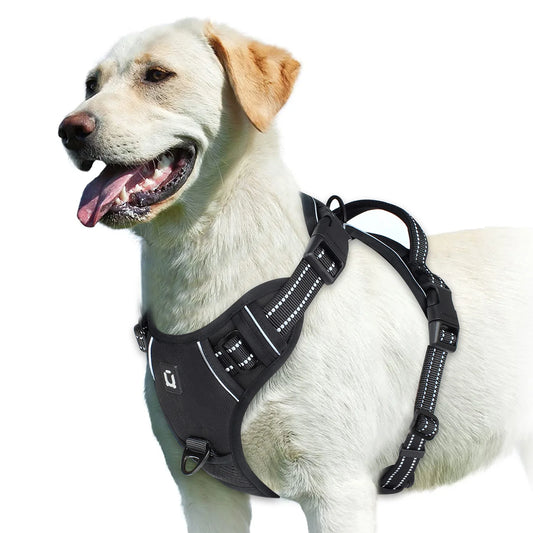
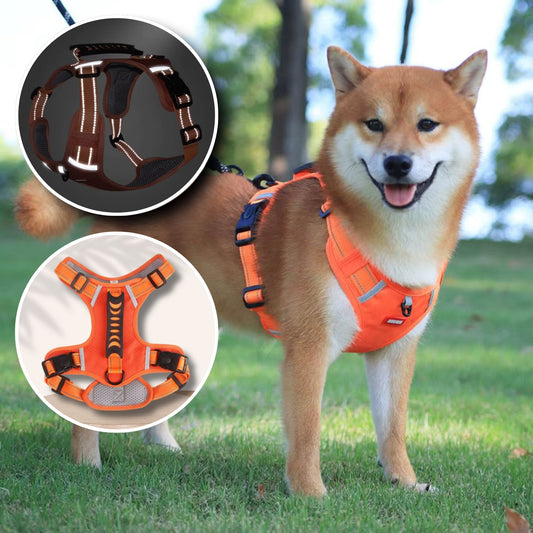
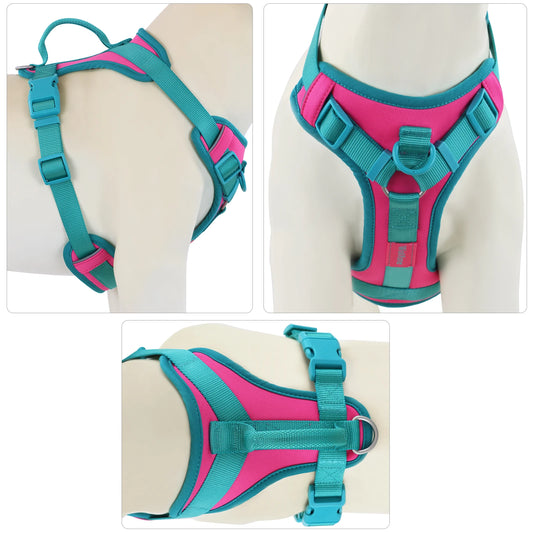
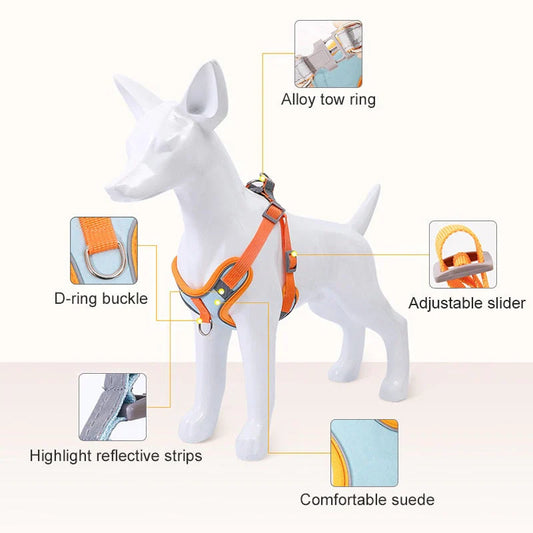
The Y-harness runs between the front legs and leaves the shoulders free. It's the most common shape for an everyday dog harness, for short walks as well as longer outings:

  • the comfort no-pull Y-harness, in padded nylon, XS to L, in six colours, described on its page as designed for city walks;
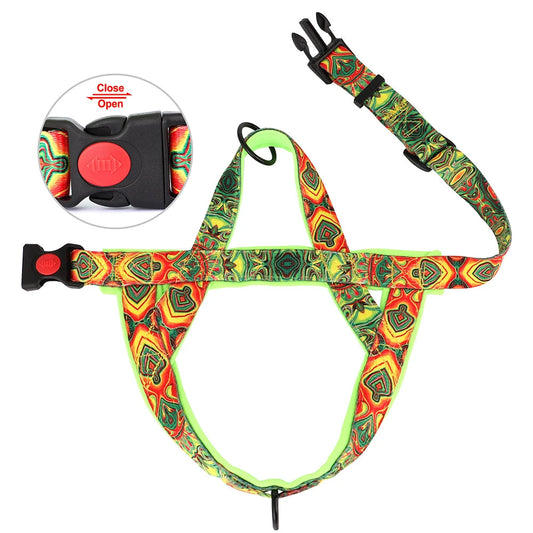
  • the adjustable Y-harness, in printed nylon, S to L;
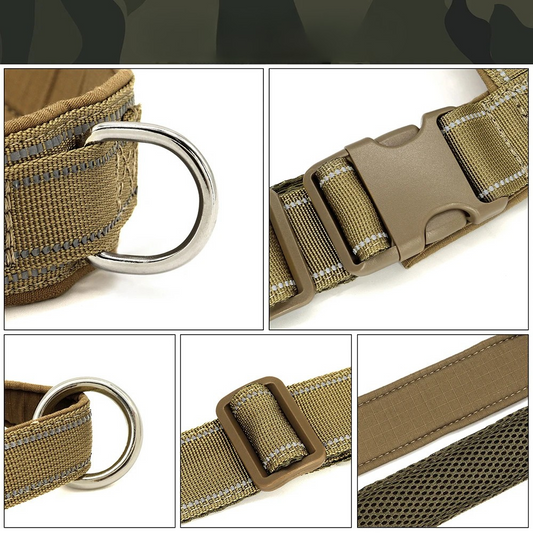
  • the double-ring Y-harness for large dogs, reflective, in L or XL, beige or black;
  • the total-comfort Y-harness, breathable, from S (4-7 kg) to XL (30-50 kg), with or without a lead.

Vest harnesses and H-harnesses

The vest harness covers more of the chest and back, which spreads the pressure of the straps:

  • the reflective no-pull vest harness, in padded nylon, XS to XL;
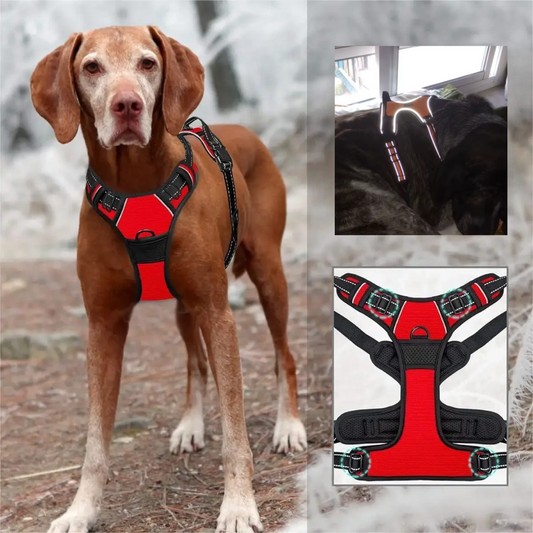
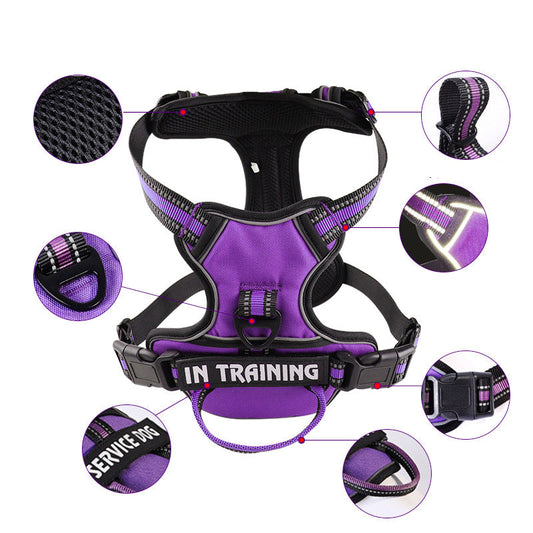
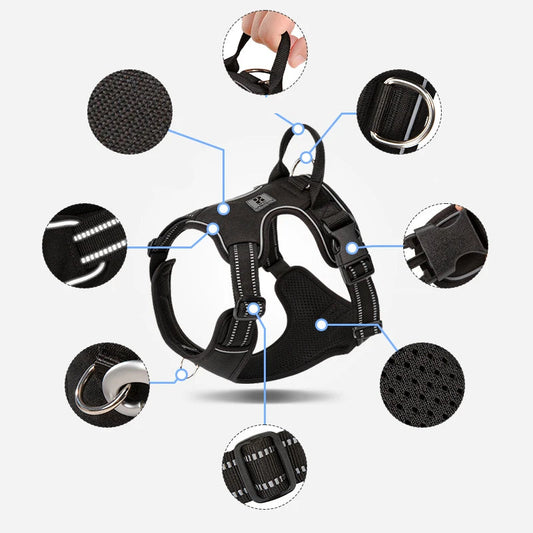
  • the no-pull H vest harness, in breathable polyester, with double attachment and back handle, in eight colours;
  • the comfort no-pull harness, S to XL, in eight colours;
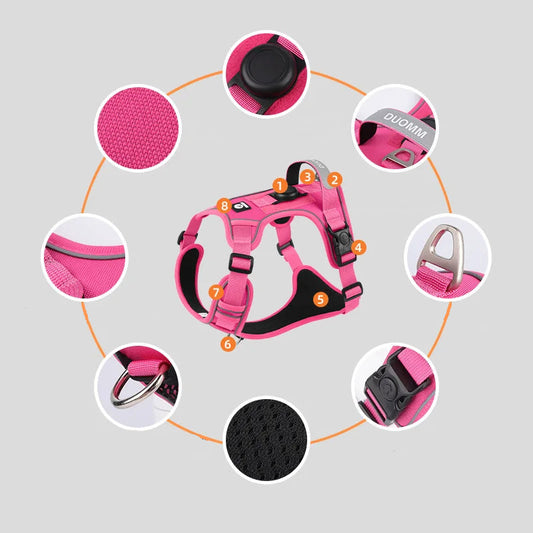
  • the No-Pull Dog Harness, GPS/AirTag Compatible, in padded polyester, designed to hold a tracker.

Harnesses with leads, reflective for evening walks

For heading out with a complete set, or walking your dog at dusk, several models come with a lead in the same colour:

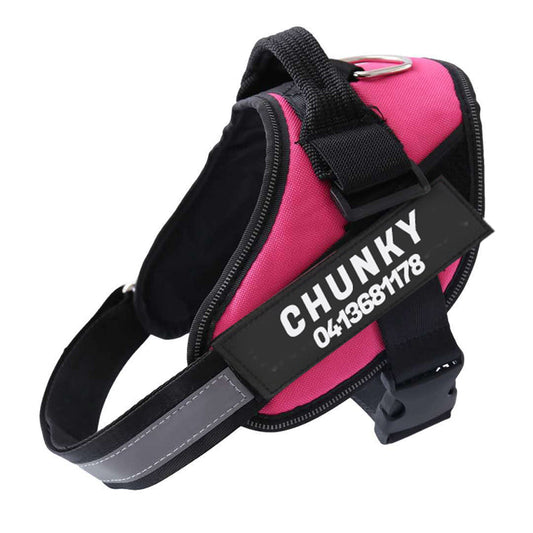
  • the Ergonomic No-Pull Dog Harness with Lead, XS to XXL, with reflective strips and a built-in name and phone tag, with or without a lead;
  • the 2-in-1 reflective no-pull harness and lead, in padded nylon, S to XL;
  • the two-tone reflective no-pull harness, described on its page for night-time walks;
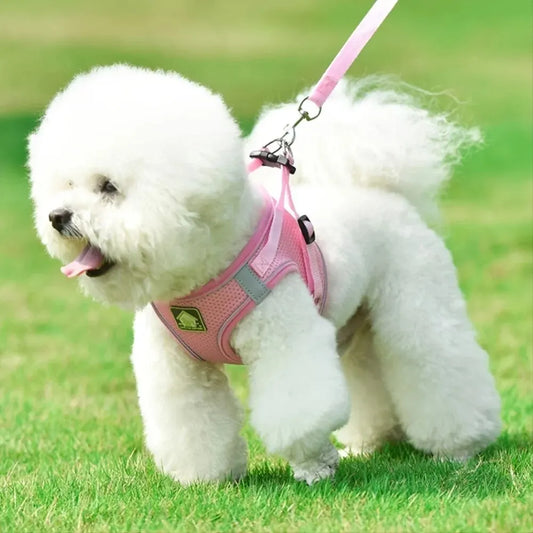
  • the 2-in-1 lead and harness in breathable mesh, XS to XL, presented on its page for puppies.

Harnesses for large dogs and strong pullers

For powerful dogs, focus on strong straps and attachment points:

  • the No-Pull Dog Harness, Reinforced, in reinforced polyester, described on its page for large breeds and active walks;
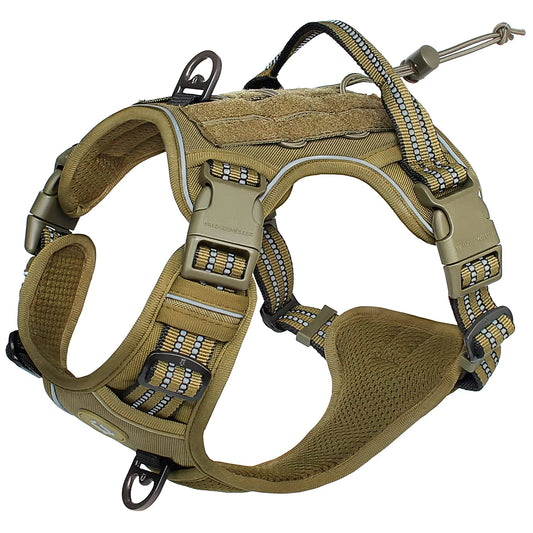
  • the Tactical No-Pull Dog Harness, in reinforced polyester, with control handles and metal rings front and back, M to XL;
  • the adjustable no-pull harness, from S (5-7 kg) to XL (over 25 kg).

Small dogs and head halters

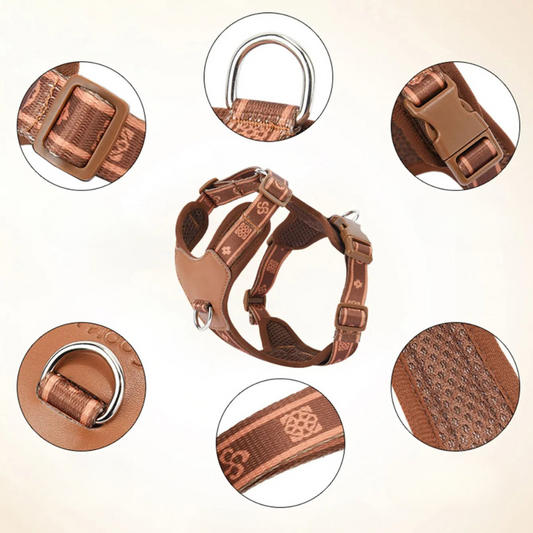
For small dogs, the faux leather no-pull harness, in synthetic leather and mesh, comes in sizes XS (2-4 kg) to L (14-22.5 kg). The No-pull training harness is a head halter: it sits on the muzzle and behind the ears, and guides the head rather than the chest. For other lightweight models, see our range: small dog harness.

Which no-pull harness should you choose?

  • Dog that pulls on walks: a Y-harness or a vest harness, with the lead clipped to the front ring.
  • Strong puller, large breed: the reinforced harness or the tactical harness.
  • Evening walks: a reflective harness, with or without its lead.
  • Escape artist: the harness compatible with a GPS tracker or AirTag.
  • Puppy or small dog: the faux leather model in XS or the 2-in-1 mesh set.

Choosing the right dog harness size

Measure your dog's chest girth, just behind the front legs, then the neck at its base. Compare with the size chart on each product page: some give a weight per size, others only a size from S to XL. If between two sizes, take the larger one and adjust the straps. Once the harness is on, two fingers should fit under each strap. Too loose and the dog can slip out; too tight and it rubs under the legs.

Learning to walk without pulling

The harness helps, but it doesn't replace lead training. Clip the lead to the front ring, and stop as soon as the lead goes tight: the dog learns it only moves forward when the lead stays slack. Reward it when it comes back to your side. For all dogs, short sessions in a quiet place, on the same route, work better than a long walk where it pulls non-stop.

FAQ

Do no-pull harnesses work?

The front attachment turns the dog towards you when it pulls, instead of letting it move forward. The harness isn't enough on its own: combined with lead training, it helps the dog understand that it shouldn't pull.

Which harness is recommended for a dog that pulls hard?

A model with reinforced straps, a front ring and a handle on the back to take back control, such as the tactical harness or the reinforced harness in the selection.

What is a T-harness?

A harness whose chest strap runs horizontally in front of the shoulders, in a T shape. The Y-harness, by contrast, runs down between the front legs and leaves the shoulders freer.

How do I stop my dog pulling on the lead?

Don't move forward when the lead is tight, reward walking by your side, and use a no-pull harness with a front attachment during training.

To complete the look

For other models, see our full range of dog harness. For journeys, see our Car harness selection. The rest of the kit is in our dog products.