AirTag cat collars: how do you combine safety and tracking every day?
Losing track of their pet is a fear shared by many cat owners. More and more, the AirTag cat collar is proving an effective way to quickly locate a curious, sometimes runaway companion. Designed to hold an Apple-compatible AirTag holder, this accessory combines practicality, safety and comfort. Modern collars are evolving in looks too: durable materials, details that are reflective for night-time visibility, sound accessories… Technology now gives owners several options that combine style and protection. Let's look at the key criteria for choosing and caring for a good GPS collar while keeping your cat's wellbeing in mind.
Choosing a cat collar that fits an AirTag
A cat collar has several jobs to do: enable location tracking via a reliable AirTag holder, ensure your pet's comfort and keep it safe as it moves around indoors and out. Thinking about these features when you buy saves a lot of hassle when it comes to fitting the AirTag case around your cat's neck. Many adjustable models are now available, for a perfect fit on every moggy.
For owners who want to follow their cat closely on its daily adventures, it makes sense to look at highly reliable connected kit such as a Collar camera. Choosing an AirTag-compatible collar means the tracker fits in perfectly without bothering your cat. Make sure the model you choose has a breakaway system and is built to withstand an active cat's daily life, indoors and out.
How do you ensure AirTag compatibility and breakaway safety?
The first criterion is Apple compatibility: not every collar has a dedicated slot or a GPS tracker holder. Make sure it really is a collar specifically designed to hold an AirTag or its case, with a secure anti-loss and ergonomic design. For safety, go for breakaway designs: they come undone if your cat gets caught on something, limiting the risk of accidents. Some models also have an elastic section or a quick-release clasp to strengthen this essential protection, especially for adventurous cats.
Getting the neck fit right is crucial: an adjustable collar lets you find the ideal size, stopping it slipping over the head while preventing any accidental choking. Always take the time to measure your cat's neck precisely, then check that two fingers fit easily under the collar once it's on.
Why choose materials suited to a cat's daily life?
Makers offer several options for an ID collar: braided nylon, soft silicone, classic leather or satin velvet. Each material has its advantages: nylon stays light and tough even in bad weather, while leather appeals with its natural look and soft feel against the skin. Silicone offers pleasant stretch for sensitive cats and is easy to clean (a quick rinse is enough). Velvet, finally, is especially soft to the touch.
Strength and durability vary with the material, though. A cat collar worn all the time has to withstand rubbing, the odd scratch and changing weather without wearing out quickly. So go for careful finishing: reinforced stitching, rounded edges and rust-proof details, especially around the AirTag holder and the clasp.
Key features for better GPS tracking and comfort
When you decide to fit your cat with an AirTag-style tracker, it becomes essential to monitor its location tracking while respecting its freedom of movement. Whether it's lightness, sound accessory or night-time visibility, a few details make daily life much easier for both owner and cat.
To get the most out of all the features of an AirTag-compatible collar, consider GPS tracking and your pet's wellbeing alike. A well-chosen collar maximises safety without sacrificing comfort.
What are the options for night visibility and comfort?
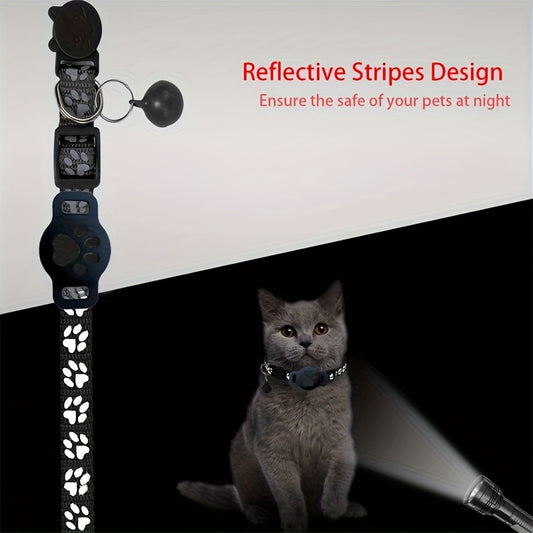
Many cats love exploring outside at dusk or before dawn. A reflective collar boosts their night-time visibility against traffic hazards, making it more likely you'll quickly find a cat that's lost or hiding in the dark. Check the thickness and flexibility of the reflective material so it doesn't bother your cat and stays effective over time.
At the same time, the lightness is still essential: too heavy, and the collar may hinder your cat or be seen as a nuisance it keeps trying to remove. Choose models whose total weight (collar and AirTag holder included) is soon forgotten after a few minutes' wear. Systems that are adjustable or use a slim buckle favour comfort while limiting the risk of skin irritation.
How do you use bells and sound accessories to locate a cat?
Adding a bell or small jingle bell to the AirTag holder may seem minor, but it helps with locating by sound, especially at close range. Hearing your cat move around the house or garden adds peace of mind during the day, particularly if your companion is very stealthy.
Be careful, though, to choose a sound accessory that's neither too bulky nor too loud, so as not to stress your cat for nothing. Some models even have a detachable bell, so you can remove it at night or when it isn't needed.
Care, fitting and practical tips for peace of mind
Investing in an effective AirTag holder that's also comfortable means a better experience for owner and cat alike. But to get the full potential out of this geolocation device, there are a few steps to follow for fitting, care and getting your cat used to it.
A regular routine of cat collar care and AirTag holder upkeep extends the life of the whole set and keeps GPS tracking reliable over time.
How do you fit the AirTag to the collar correctly?
First of all, make sure the supplied AirTag case slots perfectly into the sleeve or attachment provided. Poor fixing can lead to losing the tracker, especially if your cat plays or climbs a lot. Slide it into its pocket, then clip it firmly shut. Test the stability before letting your cat go, by shaking it gently or tugging on it to spot any weakness. On some models, reinforced loops hold the case, reducing the risk of tearing.
Once fitted, turn on tracking via the Apple-compatible network by following the dedicated instructions. If hair or mud builds up on the holder, regular cleaning with a damp cloth helps keep it effective. Also check that the AirTag works properly by testing remote location from your phone or tablet.
How do you get your cat used to wearing an AirTag collar?
Switching to a smart collar sometimes takes a short adjustment period. At first, simply let your cat sniff and handle it to ease any fear. Then put it on for just a few hours while watching its behaviour. If there's no sign of discomfort, gradually increase the time.
Reward your cat regularly with small treats or play sessions as soon as it tolerates its new accessory – this builds a positive association. Some more cautious cats need repeated daily practice before they forget the collar is there. Check the coat and skin during the first few days to catch any sign of rubbing or discomfort.
How do you care for it so it lasts?
Keeping the AirTag case and collar itself clean significantly extends their lifespan. Wipe the outer surfaces with clean water every week, especially after outdoor walks where dust, grass or mud can build up. For nylon versions, hand washing is enough; leather or velvet need more delicate care, either dry or with a product made for delicate fabrics.
Finally, regularly inspect the seams, fastenings and clasps for any sign of premature wear. Replace any damaged part as soon as a fault appears, to avoid losing the AirTag or an incident affecting breakaway safety.
In short, choosing an AirTag cat collar significantly improves safety and peace of mind for owners while respecting the cat's wellbeing. Go for models that are well-fitting, adjustable and easy to care for to support your companion on all its adventures for years to come. Explore our collection of cat accessories and choose the ideal solution to protect and track your pet every day.
You'll find more options in our cat collar range. It sits alongside GPS cat collar and breakaway cat collar, often bought together. For everything else, it's all in our cat supplies.