How to use a humane cat trap to safely catch a stray cat
Dealing with stray cats or feral cats is an ongoing challenge for many pet owners and animal welfare groups. Whether it's for neutering, vet care or sorting out local nuisance, using a humane cat trap is the most ethical and safe solution. Suited to humane capture of stray animals, it keeps both the trapped cat and the person handling it safe. To act effectively and respectfully, it's essential to understand how this equipment works, choose the right model and follow good trapping methods.
Why choose a humane cat trap to catch stray animals?
Using a humane cat trap meets both practical and ethical needs. Unlike old-style traps, these devices are designed to minimise stress and avoid injuring stray cats. A modern cat trap puts the animal's safety first and makes things simpler for the user, making capture more humane and controlled. If you'd also like to let your own cats come and go freely, discovering the Cat flap can be really useful to make their daily life easier while keeping them safe.
The tipping-plate traps or those with an automatic door significantly reduce the risk of injury during capture. Combined with suitable trapping accessories such as gloves, nets or graspers, they ensure safe handling. Choosing the right size and materials for the humane cat trap also prevents escapes and ensures the equipment lasts, even with wary or fearful cats.
Keeping capture truly "humane"
Catching a feral cat should never cause pain or excessive fear. The tipping-plate traps work with a quick, smooth mechanism, avoiding sudden movements that could frighten or hurt the cat. This type of cat trap puts animal welfare first and supports a respectful approach, greatly reducing stress during capture.
Some models include soft padding and secure locking systems to limit scratches, bites or injuries during handling. The aim is still a temporary capture, with no lasting impact on the trapped cat's health or behaviour, while keeping it safe until it's taken to a vet or a foster home.
Safer handling with the right accessories
Handling a humane cat trap takes care and preparation. The stray cats can become very agitated once confined. It's best to complete your kit with thick gloves, long graspers or a reinforced net to approach the animal safely. These trapping accessories let you deal calmly with even the most fearful cats.
Your landing net can also help guide a small animal gently into the cage if needed. Matching your tools to the size and temperament of the cat reduces the risk of stress and accidents, for a calm, controlled operation for everyone involved.
How does a tipping-plate trap work, and how do you choose the right one?
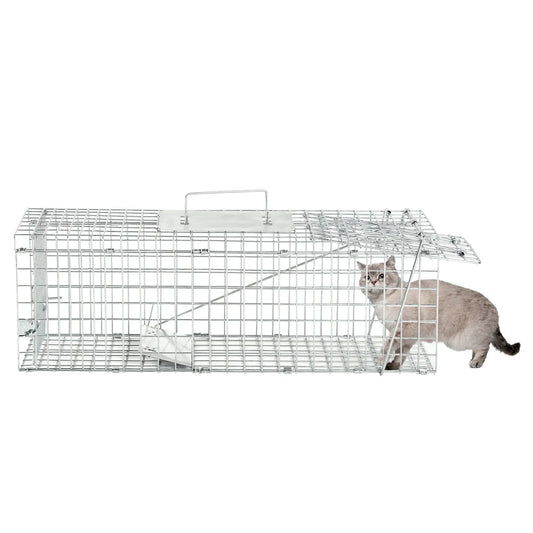
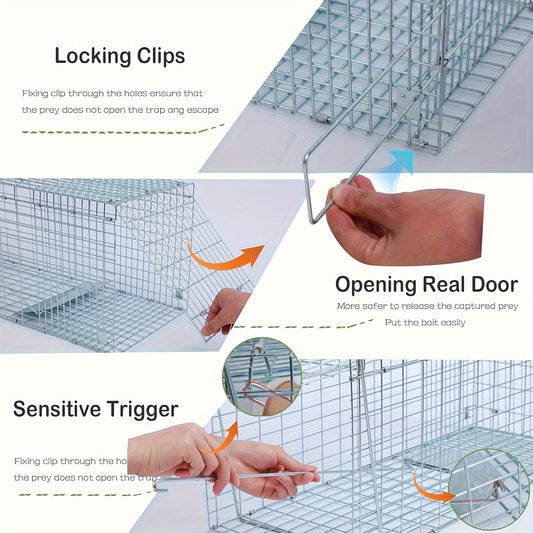
A tipping-plate trap works with a trigger plate: as soon as a stray cat steps on it, the tipping door closes automatically. This system is fast and reliable, with no risky manual intervention at the critical moment. To pick the right humane cat trap, consider its size, sturdiness, portability and how easy it is to clean.
Choosing the right cage size and material
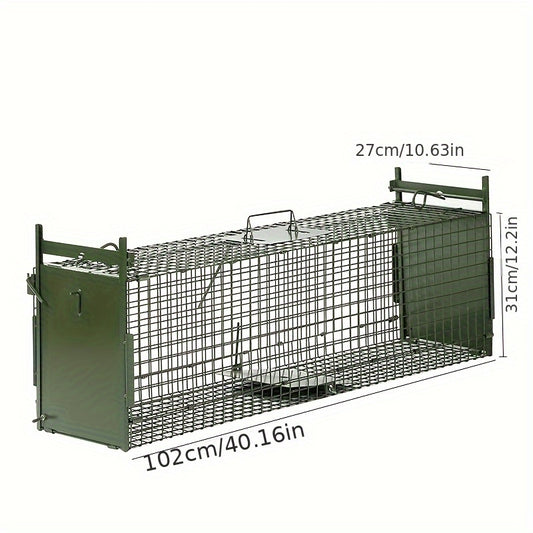
There are different formats of humane cat trap to suit the age, size and temperament of the animal you're trying to catch. A cage that's too small can cause panic and injury, while a well-sized model reduces anxiety. Galvanised steel cages stand up better to scratching and are easier to clean after each use. Rounded corners and extra padding further reduce the risk of injury if the trapped animal moves suddenly.
A foldable dog crate is a real plus for transport and storage, especially for volunteers on the move. Checking that the main hinge is solid and the latch is in good condition before each use means you can work safely, with no fear of escapes.
Choosing between a tipping door and an automatic door
There are two main types of closure on the market: the tipping door, the classic option, and the automatic door. The first shuts the moment the cat steps inside, while the second can be triggered remotely or on a delay – ideal for especially wary animals. Matching the system to how cautious the cat you have spotted is gives you the best chance of success.
The automatic models are especially well suited to night-time trapping or when discretion matters most. Assessing the needs of each situation helps you pick the cat trap that will work best for the job in hand.
Make cleaning and transport easier
Hygiene is essential when you use a cat trap again and again. Choosing a cage that comes apart or one with removable parts makes thorough cleaning easy and limits the spread of disease between the different cats you catch. Taking out the floor tray, doors and dividers lets you reach every corner that may be soiled.
Once clean, the foldable dog crate stores easily in a car or a small space. Comfortable handles give you a better grip when moving a stray cat that may well be nervous. Looking after the cage regularly extends its life and keeps every new rescue mission safe.
Practical tips for luring and catching a feral cat without stress
Beyond choosing the humane cat trap, the way you bait it and coax a feral cat inside decides whether the operation succeeds. A few simple tricks make the trap more inviting and help ease the natural wariness of stray cats.
Choose the right bait for the best results
Choosing the bait is crucial to attract a feral cat or an unsociable cat. Strong-smelling food such as fish or premium wet food quickly gets the attention of stray cats. Placing the bait right at the back of the cage encourages the cat to go all the way in before the mechanism is triggered.
Strong smells tempt even the most cautious cats. Switching bait or trying different foods can win over the shyest ones. The variety and freshness of the food you offer play a key part in a successful catch.
Set up the humane cat trap in the right spot
Where you put the cat trap has a direct effect on how appealing it is. Watching the cat's usual routes lets you place the cage along its favourite paths and improves your chances. Setting it near natural cover, under a bush or close to a water source, makes it look less suspicious.
To reassure the cat, you can put a cloth with a familiar smell or a sprig of catnip inside the cage. Keeping the trap steady and partly hiding it under leaves or a dark sheet encourages the cat to come closer without fear and step inside.
Keep an eye on the trap and act quickly
As soon as the cat trap is set, check it regularly so the trapped cat is not shut in for too long. That way it can be taken quickly to the vet or a foster home, keeping the animal's stress to a minimum.
When collecting the cat, wearing protective gloves and handling the cage gently calms it and prevents any escape attempt. Covering the cage with a thick cloth helps settle the animal until the end of the journey, making the experience as gentle as possible for both the cat and the person helping.
In short, using a suitable humane cat trap, combined with gentle trapping techniques and the right accessories, lets you catch a stray cat safely and humanely. Take a look at our full range of trapping accessories for dogs and cats to carry out your rescues in the best possible conditions.
You'll find more options in our cat carriers range. It sits alongside dog crate, often bought together. For everything else, see our cat supplies.