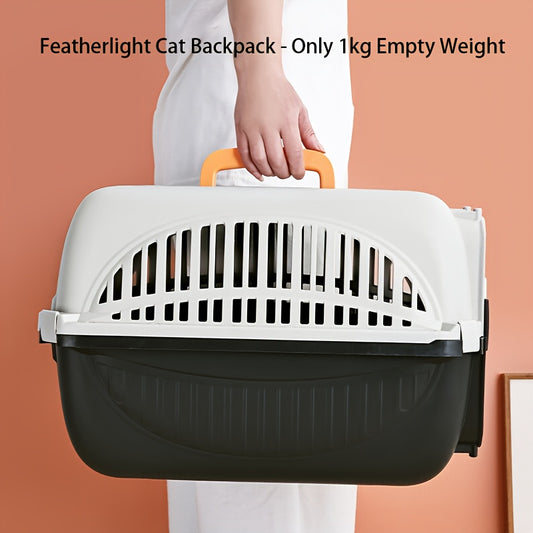
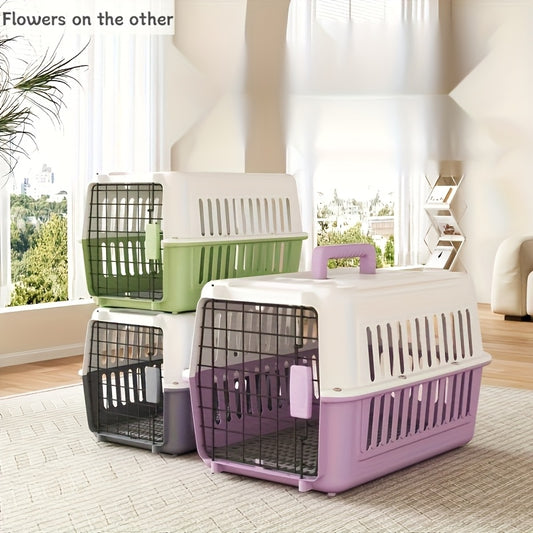
Cat carriers at a range of prices
Ten rigid or folding models, in PP, PE or ABS plastic, to transport your cat safely. Some close with a plastic door, others with an iron or metal door. To choose, start from your most frequent trip: vet, car, train or plane.
Rigid carriers for everyday use
For vet visits and short trips, a light carrier with a handle is usually enough:
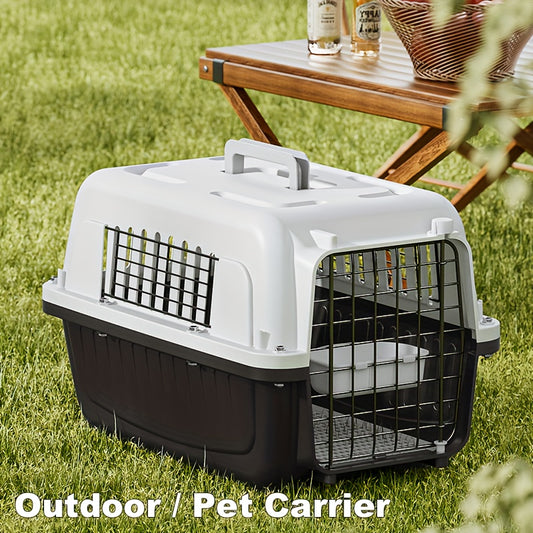
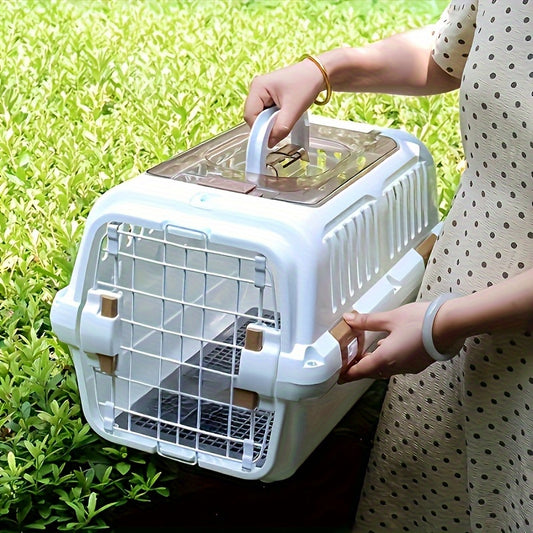
- the portable airline-style carrier, in PP, with a plastic or metal door, in grey or black;
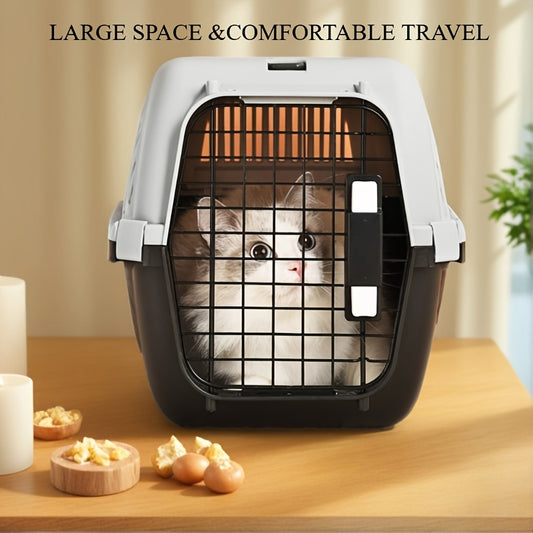
- the PP model with secure door, with a plastic or iron door, from black to blue;
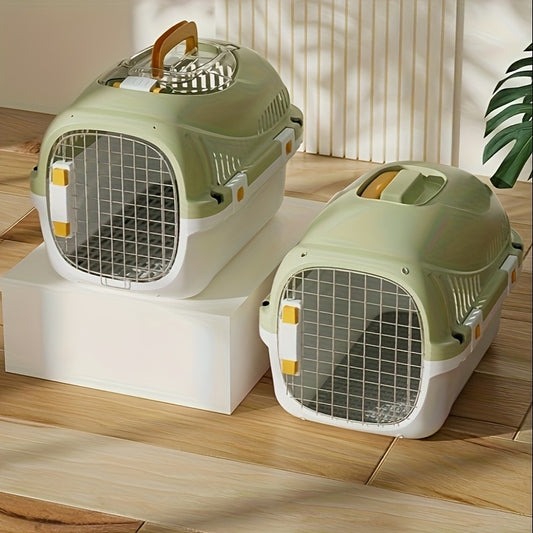
- the light pet carrier, in grey, purple, green or blue;
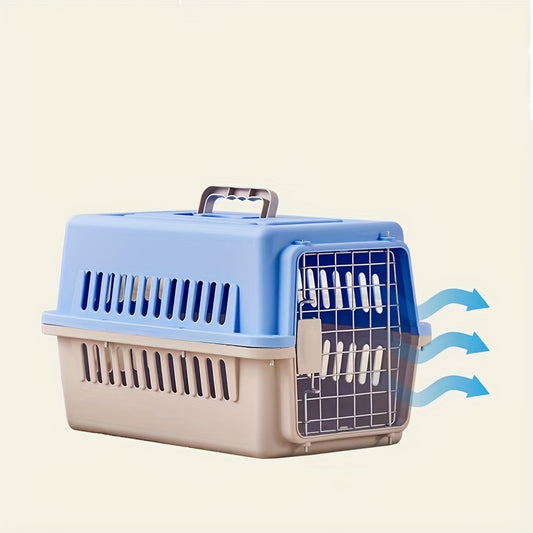
- the reinforced PE model, which its product page describes as sturdy and well ventilated, in blue, pink or red.
Folding models
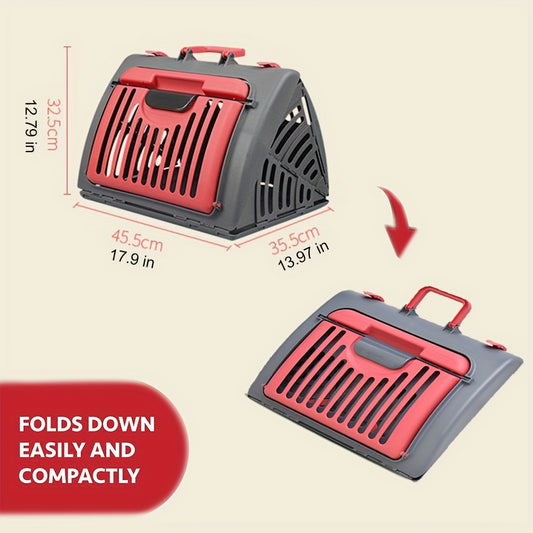
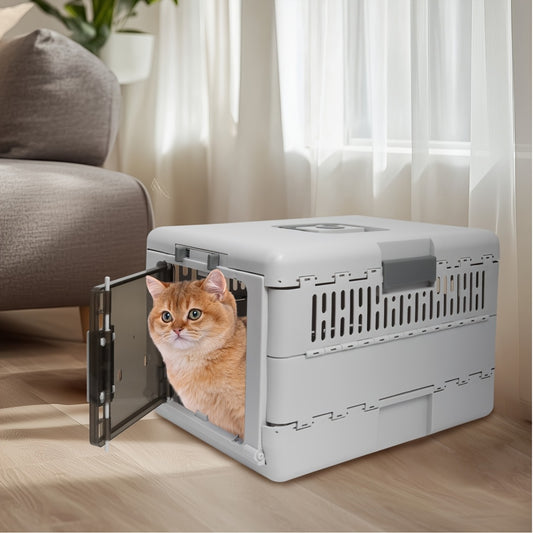
A folding model stores flat between trips, handy if space is tight at home. The folding cat carrier is light and ventilated, in red or brown and beige. The folding carrier with a rigid, airy design is made of hard plastic, with ventilation openings and a front door.
For long journeys
For longer trips, first check what each product page says:
- the IATA-compliant airline carrier, in PP, which its product page says meets IATA standards, for cats and small dogs;
- the airline-approved model, in ABS, with metal door and ventilation on three sides, in a classic version or with iron side panels;
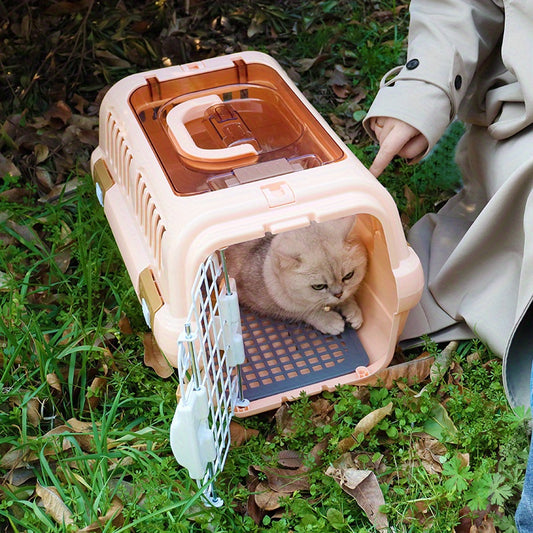
- the ABS model with dual access, from the top and the front;
- the sturdy PP model with secure closure, for road, rail or air, with an opaque roof on some colours.
Each airline sets its own rules for pets in the cabin or hold: check the accepted dimensions with them before booking.
How to choose a cat carrier?
- Vet visits : a light rigid carrier with a handle.
- Cat that refuses to go in : top access, so you can lower it in rather than push it.
- Little storage space : a folding model.
- Flying : a model whose product page states IATA compliance or airline approval.
- Cat and small dog : carriers designed for both animals.
For size, your cat should be able to stand up, turn around and lie down inside. Measure it from nose to base of tail, then from floor to top of head, and compare with the length and height on the product page. A large cat needs more room.
Rigid carrier or carrier bag?
A rigid plastic carrier protects better against knocks and stays stable in the car. A soft fabric carrier bag weighs less and goes over your shoulder, better suited to a calm cat. This selection brings together the rigid models; for a soft carrier, see our section cat carriers.
Getting your cat used to its carrier
Leave the carrier open around the house for a few days before you set off. You can add a cushion or a cloth that carries its scent: a cat that goes in on its own to sleep will find it less of an ordeal on the day. On the road, put it on the floor behind a seat or strap it in with the seat belt so it doesn't slide.
FAQ
Which carrier for a cat on a plane?
Choose a model whose product page states IATA compliance or airline approval, then check the dimensions and weight your airline accepts: they vary from one airline to another, and depending on whether the cat travels in the cabin or the hold.
Which one for the car?
A rigid carrier, which you can wedge on the floor or secure with the seat belt. It's best to add a blanket underneath if the floor is slippery.
How to clean a cat carrier?
Remove the cushion or mat, wash the plastic interior with soapy water, rinse and leave to dry. Remember to add a clean cloth before putting your cat back in its carrier.
To complete the look
To go further, also discover our whole cat range and the humane cat trap. Also see our section humane cat trap and cat flap, so your cat can come and go at its own pace. Finally, find all our cat products, to add to its corner.