Choke chain for dogs: understand it, choose it and use it safely
The choice of dog collar is never a trivial matter, especially when it comes to models designed for training or behaviour control such as the choke chain. Many owners of active or powerful dogs turn to these devices to work on dog training, particularly with a dog that pulls on the lead or struggles on walks. Yet this type of collar is controversial, both for its potential benefits and for the strict precautions it requires. Knowing how it works, when it's appropriate and why safety must remain the priority helps you respond in a way that respects your pet's wellbeing while supporting their training.
How a choke chain works: principles and materials
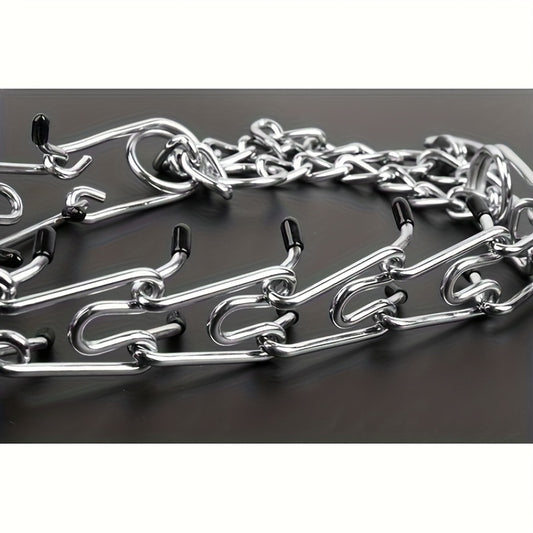
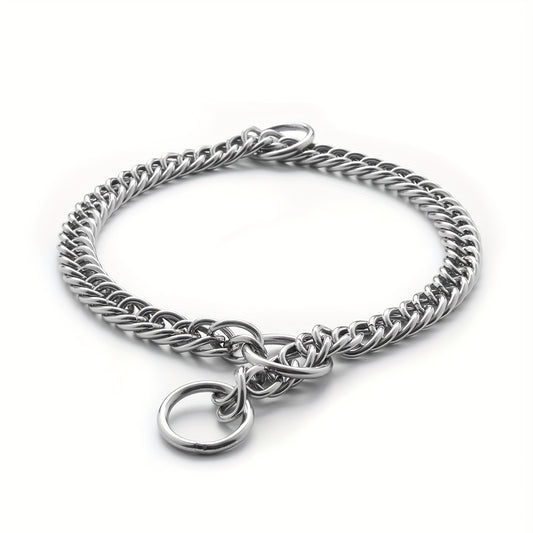
Understanding how a choke chain works helps you judge whether it's useful as part of targeted dog training. There are several types of training collars based on correction by pressure: full choke chain and half-check collar are among the most common, each meeting a particular need depending on the dog's temperament and walking habits.
How does the tightening system work?
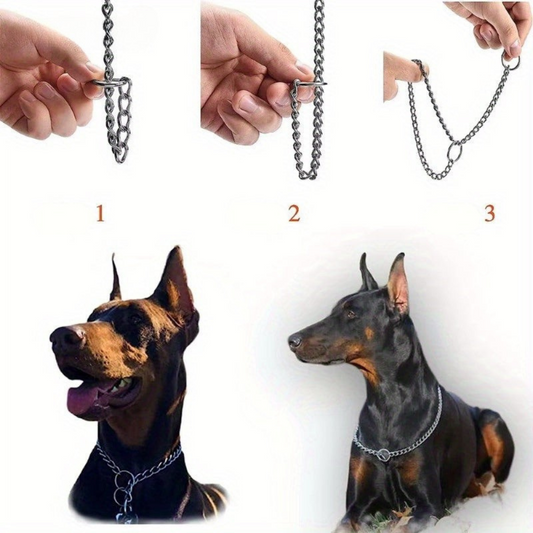
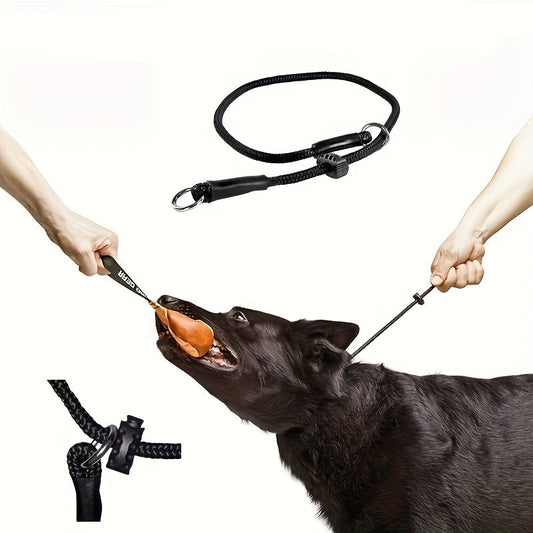
The principle relies on a mechanical effect: when the dog pulls on the lead, collar slides and applies pressure around the neck. Unlike a standard model, the collar tightens in proportion to the force applied, giving the dog an unpleasant but temporary stop signal. The sensation stays moderate and brief, aiming to correct without hurting or frightening the dog. In practice, different models work more or less gently: the half-check collar often includes a stop that limits the pressure to keep the dog safe.
Choosing the right materials for durability and effectiveness
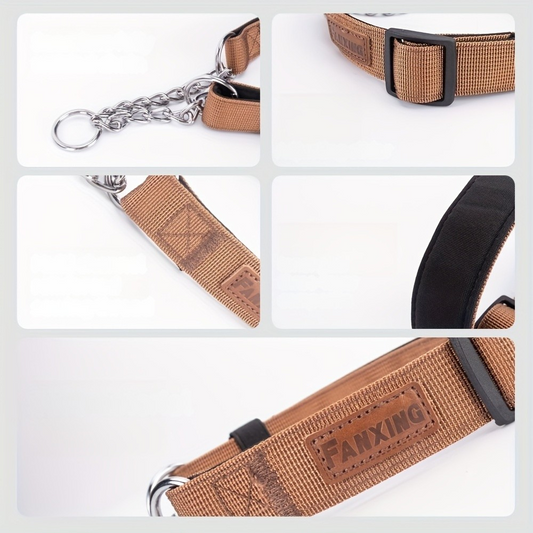
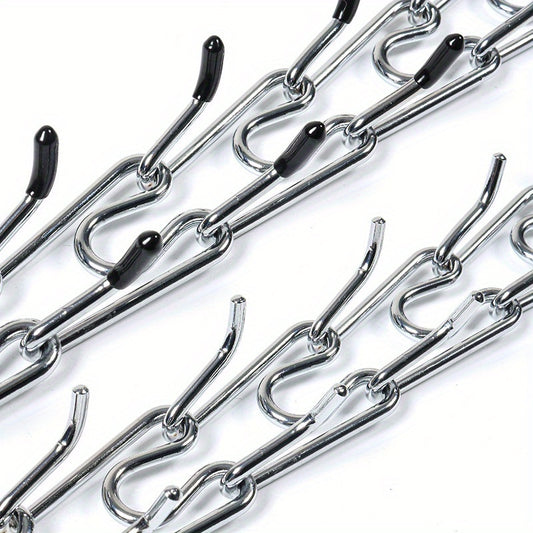
Manufacturers offer various materials for strength and comfort. You'll often find stainless steel, rust-resistant and easy to clean, ideal for regular or heavy use. Chrome-plated metal also offers longevity and shine, while some prefer brass for its classy look and resistance to wear. The synthetic materials, such as nylon or polyamide, are valued for their lightness and range of colours.
The choice of material affects the lifespan of the training collar, but also the safety and how gentle it is on the dog's skin. A secure clasp or a smooth-running chain are further safeguards during use. Before choosing a specific model, compare the different options and go for quality and careful manufacturing to limit the risk of injury or discomfort.
Use and adjustment: staying safe during dog training
Using a choke chain requires clear rules to balance training effectiveness and safety. Poor adjustment or repeated use without care can cause stress, pain or injury. Understanding how to adjust this collar correctly, knowing when it can serve as an occasional aid and knowing its limits prevents many mistakes in training.
Why is a good fit essential?
Matching the collar size to your dog's neck is fundamental, whatever their breed or size. Too tight, it risks causing skin injuries or damaging the windpipe; too loose, it will lose its effectiveness and could slip out of your control. For a good fit, the choke chain should be chosen from the sizes available (small, medium, large), sometimes leaving a few centimetres of slack so it can be slipped off quickly over the dog's head.
A half-check collar usually has a metal stop to prevent over-tightening, which reduces the risk of excessive pressure. Check that two fingers slide just under the collar once it's fitted around the neck: this simple test ensures a comfortable fit for the activity you have in mind. For walks after dark or better visibility, there are also dedicated accessories such as the Light-up dog collar.
Safety and preventing accidents during training
It's best not to let a dog wear a training collar outside a training session or a supervised walk, as accidental snagging can pose a real danger. Never meant as a permanent accessory or a replacement for a regular harness or collar, this device should be kept for short, supervised use: training situations, one-off correction of unwanted behaviour, or a transitional step towards positive training.
To improve safety, it's better to choose models with a secure clasp that prevents accidental opening or sudden tearing off. It's also important to pair every correction with a consistent training method, where each pressure from the collar sends a clear message to the dog, far from any random or misunderstood punishment.
Alternatives to the training collar and its limits in dog training
Using a choke chain is not a one-size-fits-all solution for every dog. Other tools exist to manage a dog that pulls on the lead or one with behaviour problems. Knowing their roles, pros and cons points you towards a tailored approach to dog training, where wellbeing and trust between dog and owner remain essential.
Other ways to manage a dog that pulls on the lead
Several alternative products help channel some dogs' energy: the no-pull dog harness works mechanically by redirecting the pulling force to the side, making walks more pleasant. Training head collars also help teach calm walking, guiding the direction of the head without restricting the neck or breathing. These tools encourage a gentle, gradual correction, suited to most dogs, even those prone to pulling hard.
Using a choke chain should be a last resort, once other methods have failed and the dog's behaviour is a serious nuisance or an immediate risk. Guidance from a professional dog trainer will then make the tool more effective while limiting misuse or mishandling, keeping your relationship with your companion balanced and healthy.
Limits, risks and controversy around pressure-based correction
Despite some recognised benefits, misuse of a training collar raises concerns about safety and ethics. The main danger comes from pressure-based correction, which can cause anxiety, physical pain or mistrust if the dog experiences these sensations without understanding why. Vets and behaviour specialists warn against overuse, which can lastingly damage the trust between dog and owner.
Distinguishing positive correction, based on a brief and measured signal, from systematic or harsh punishment is fundamental. The best strategy combines patience, regular training, verbal encouragement and tools suited to the dog. More than just a corrective accessory, the choke chain should remain a temporary, considered aid in the service of respectful, lasting dog training.
In short, a choke chain can have its place in the training kit of an informed owner, provided safety and fitting rules are followed to the letter. To go further in choosing the right accessories, discover our collection designed for the wellbeing and positive training of your dogs and cats.
This choice is part of our dog collar range. It sits alongside dog training collar, often bought together. Everything else for daily life is in our dog products.