Remote training collars for dogs: how to choose and use this training tool?
Choosing a remote training collar for your dog often raises questions for owners keen to ensure dog training that works while respecting their dog's wellbeing. This tool, also known as a training collar, comes in several versions depending on your goal: improving obedience on walks, tackling excessive barking or preventing your dog from running off. To find out whether this device suits your four-legged friend and how it works, it pays to learn about its different uses, its benefits and the precautions to take. Let's look at what you need to know to make an informed choice.
How a remote training collar works
Before buying a remote training collar, it is important to understand the different technologies on the market. The general principle relies on sending a static stimulation, a vibration or a beep to catch your dog's attention during training. This approach links unwanted behaviour with an unpleasant sensation, encouraging your dog to change its ways.
What are the main functions of remote training collars?
Most training collars models generally offer several correction modes: static pulse, vibration and beep. The intensity of the electric stimulation can be adjusted to your dog's sensitivity. The beep often acts as a first warning before any correction, while vibration offers an alternative to electric shocks. This range of signals lets you adapt your dog training approach to each situation and each dog.
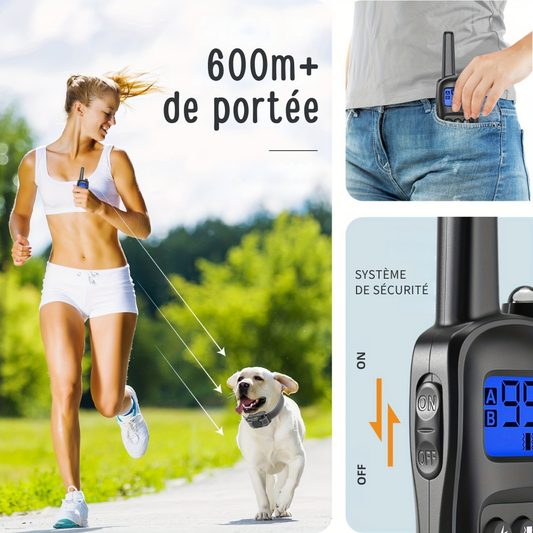
Some models also offer more advanced options, such as an anti-bark function or the ability to work on remote recall. They then help establish or strengthen obedience in dogs that are hard to manage outdoors. Range varies by model, which is useful in large open spaces for tracking and locating your dog.
Differences between training collars, anti-bark collars and anti-escape collars
Each type of collar serves a specific purpose. A training collar helps manage all kinds of unwanted behaviour, such as refusing to obey or a lack of recall when off the lead. It is operated by remote control, and you still need to send the right correction at the right moment.
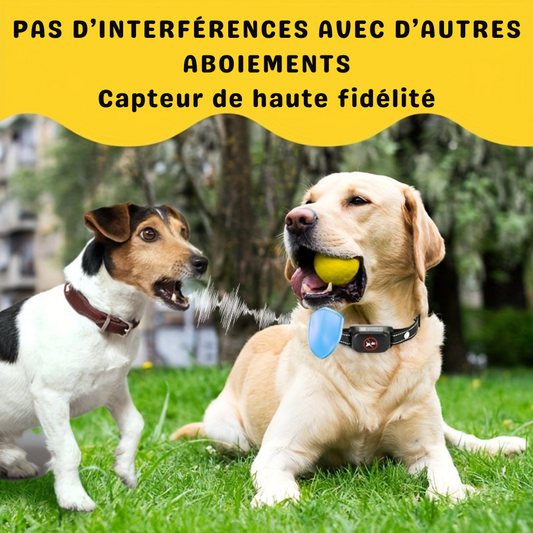
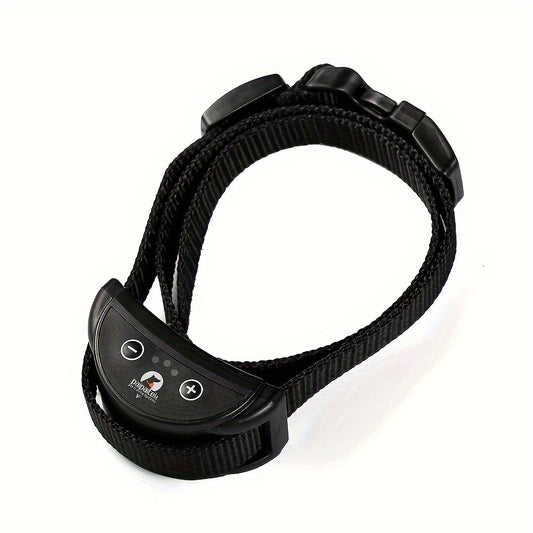
The anti-bark collar works without any input from you, as it triggers automatically whenever your dog barks excessively. As for the anti-escape collar, it is used with a physical or virtual boundary system: a stimulation warns your dog when it tries to cross the permitted area. So choose the model according to the problem you are tackling in dog training.
When and how to use a remote training collar
The question of how to use a remote training collar properly comes up often. It should never be a go-to punishment, but remain a supporting tool within a positive, consistent training method. Understanding when the collar is appropriate helps protect your bond and keeps your dog safe while learning.
When a training collar makes sense
Using a remote training collar is mainly justified alongside obedience exercises or for recall, especially with a dog that gets distracted as soon as it is off the lead. To make outings safer and find their dog easily, some owners also choose tracking devices such as the GPS dog tracker collar. If a dog ignores your call or instinctively chases prey, the collar can interrupt this behaviour from a distance. It works best as part of a structured training programme where each learning step is respected. Rewards after a good response remain essential to make the new habit stick.
When faced with problems such as nuisance barking or the urge to keep running off, some owners turn to suitable automatic models. This means assessing precisely why the dog behaves this way, as the cause of the problem affects how suitable the chosen collar is.
Precautions and recommended methods
To ensure the effectiveness and safety of the remote training collar, a few rules should be followed. Introduce the device gradually: always start with the lowest stimulation (vibration or beep), then increase only if your dog does not respond. Limiting how long it is used avoids stress or habituation. The collar must never be used to punish fear or trauma, as this could create new behavioural problems in your dog.
It is advisable to consult a dog trainer or veterinary behaviourist before you start using these accessories. Professional support ensures signals are read correctly and avoids mistakes when applying corrections, especially if you are new to collar-assisted training. Gentle training combining patience, encouragement and well-chosen gear often gets better results than a coercive approach.
Criteria for choosing the right remote training collar for your dog
The choice of collar deserves careful thought, as build and sensitivity vary from one breed to another. Other key factors come into play, from features to build quality, to guarantee both the effectiveness and the safety for your dog.
Assessing size, toughness and waterproofing
Choosing a comfortable collar that is solidly built is essential. A poorly fitted device will slip or rub your dog's neck, making every session uncomfortable. Materials must resist wear, especially if your dog loves water or sport. Opting for a waterproof model greatly extends the life of the accessory, while keeping it safe to use in the rain or near water.
Take into account your dog's weight and size : a large dog will need a collar with adjustable stimulation over a wide enough range, whereas a small dog may react even to a low intensity. Some manufacturers clearly state compatibility with specific breeds, a key point for everyday comfort.
Comparing options: battery life, range and extras
For sessions outdoors or in large gardens, range is a key criterion — some models cover several hundred metres, allowing remote control and precise location of your dog. The battery life affects how practical the collar is, especially with frequent use. Some devices also include extra options, such as light-up collars for night-time spotting or multi-dog systems run from the same remote.
Finally, make sure the stimulation functions (beep, vibration, electric shock) are easy to set. A digital screen and intuitive buttons make quick adjustments during training easier. Investing in a collar that adapts to your needs avoids repeat purchases and ensures the best experience at every stage of your dog's life.
In short, a remote training collar for dogs can be a valuable ally in dog training provided you follow certain rules and understand your dog's needs. Take the time to compare models on their features, comfort and safety. To go further, discover our collection of training accessories suited to every kind of dog and get personalised advice to make your companion's training a success.
This page is part of our dog collar. In the same vein, anti-bark dog collar and dog training collar may interest you. And our dog accessories cover everything that isn't here.