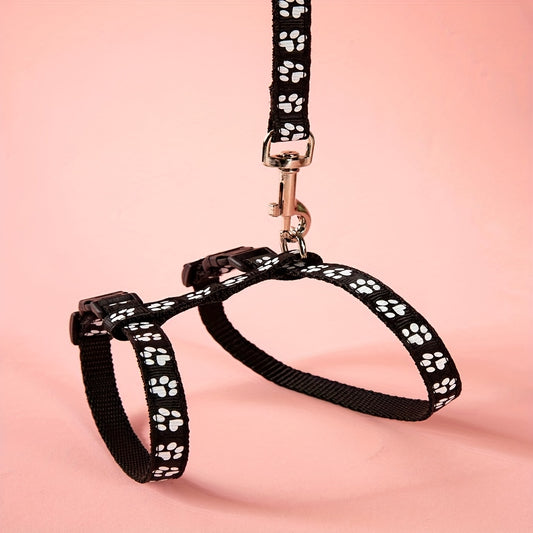
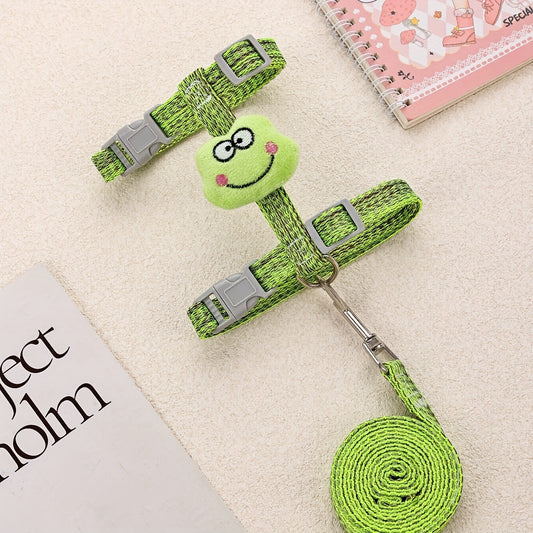
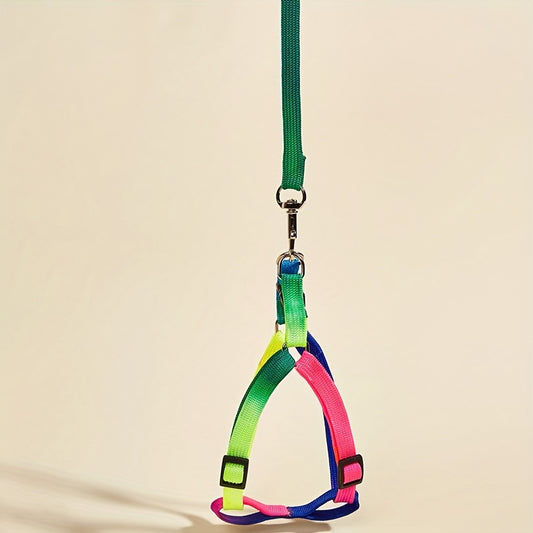
Cat harness and lead: the key to safe, enjoyable walks
Walking a cat outdoors is no longer unusual. More and more owners now choose to share this experience with their cat, but you need the right accessories to combine freedom and safety. Using a cat harness together with a cat lead lets you look after your pet's well-being while giving it a real taste of the world beyond the windows. How do you kit out properly? What tricks help a cat get used to its new gear? Find the answers in this complete guide to safe walks, comfortable and enriching for every cat.
Why choose a harness and lead rather than a cat collar?
Many owners hesitate between cat harness, cat lead or cat collars to let their pet enjoy the outdoors. Yet some accessories are clearly better suited than others when your cat's safety comes before every other concern.
Outdoors, a cat may get frightened and try to bolt suddenly. A standard collar then poses a real risk – hence the importance of strangulation prevention. A harness on the other hand wraps around a much larger area of the body, reducing this danger while spreading the pressure. Using a cat harness and lead combination avoids injuring your companion in unexpected situations and gives you better control during the walk. You'll find the details in our harness.
- The harness protects your cat's delicate neck, reducing pressure during moments of panic
- The strangulation prevention stays optimal thanks to forces being spread across the chest and shoulders
- Combining a cat harness and lead makes it easier to learn to walk safely
How to choose the right cat harness?
Every cat has its own build: size, body mass, coat density. Choosing a cat harness should therefore never come down to looks alone. To guarantee cat's comfort, the your cat's safety and the effectiveness of the gear, certain criteria are essential.
Choosing a fully adjustable harness or one with adjustable straps makes it easier to fit your cat's shape and limits discomfort on walks. The materials also matter, to avoid rubbing or irritation, while the fastening system should hold well yet be easy to use. Find our leads in this range.
- Opting for a adjustable harness – several adjustment points give a good hold without discomfort
- Make sure the materials touching your cat's skin are soft
- Check the seams are strong and the buckle or hook-and-loop fastening works well, depending on the model
- Check it's easy to put on and take off – essential for less patient cats
There are different models to suit every need and preference. Some look like simple crossed straps, while others take the form of covering jackets. The choice often depends on your cat's temperament: a more sensitive cat will probably prefer a soft, enveloping version, while an adventurer will be happy with the lightness of classic straps.
A vest-style harness generally gives better support and spreads the pulling force perfectly. This type of accessory is recommended for frequent or long walks, ensuring cat's comfort that lasts, even on long adventures. Find our breakaway cat collars in this range.
One common pitfall is choosing a harness that doesn't allow for a young cat's growth, or one that's too tight or not secure enough. This exposes your cat to escape or injury if it suddenly pulls. Measure chest and neck before every purchase to find the ideal size, even if it means choosing a model that grows with your cat. Find our GPS tracker collars in this range.
Ignoring how the lead attaches can also spoil the walk. It's best to choose a sturdy, well-placed clip to avoid any irreversible incident under strong tension.
Which lead should you choose for walking your cat?
The cat lead deserves special attention, as it needs to suit both your cat's build and the kind of outings you have in mind. Several criteria make for a truly successful walk, starting with lead length and the retraction system used.
A lead that's too short restricts exploring, while the stretchy lead (also called a retractable dog lead) gives more freedom while keeping you close if needed. This option is especially popular with owners who want to encourage their cat's curiosity without constant recalls.
- Short leads (about 1.20 m) are ideal for learning to walk calmly in town or busy areas
- The extendable leads sometimes give up to 5 metres of range on open ground – perfect for explorers
- The material (braided nylon, light rope, flat webbing) affects strength and grip comfort
Every cat lead must attach securely to the harness with a strong, reliable clip. There's no point choosing a top-of-the-range lead if the harness doesn't have a sturdy attachment point designed to withstand sudden tugs from your cat.
The whole set-up must work as one: lead weight, strength of the attachment, overall handling. Always test the gear before heading out for real, simulating a few backward movements or escape attempts to make sure everything is reliable.
Some leads offer several preset positions that you can change to suit your wishes and your cat's mood at the time of the outing. A multi-function lead lets you adjust lead length in no time – a real plus in busy areas or near a main road.
Models with a shock absorber also offer more give and soften the impact of a sudden jerk. This kind of accessory is all about strangulation prevention and boosts your cat's safety on walks in unfamiliar territory.
How do you get your cat used to wearing a harness and lead?
Getting used to a cat harness doesn't necessarily come naturally. Some cats are reluctant, or clearly distressed, when faced with this new accessory. Yet with patience and a few clever tricks, it becomes possible and often enjoyable in the long run.
Ideally, give your cat time to discover, then gradually accept, the harness – before you even think about attaching the cat lead. Place the accessory near its resting or play area so it links these objects to its familiar surroundings rather than to sudden restraint.
Here are the main steps to follow:
- Leave the harness out so your cat can rub against it or sniff it as it likes
- Try the harness on for a few minutes indoors, without the lead at first
- Reward your cat with treats or strokes after each session
- Gradually increase wearing time, then introduce the cat lead during indoor trials
- Finally, try short outings, starting in a calm, enclosed space
Following these stages greatly increases your chances of a calm walk where your cat's safety is guaranteed. If your cat shows too much stress, slow down or consult a feline behaviourist.
During the first trials, watch for all your cat's signals: low posture, puffed-up tail, flattened ears, attempts to turn back. The aim is to avoid any situation where it might panic or try to wriggle violently out of the harness to head home.
Short, positive sessions give you the best chance of quick acclimatisation. The freedom of the stretchy lead must go hand in hand with vigilance, especially near gardens, hedges or street furniture that could cause snags.
Extra tips for safe, enjoyable walks
Beyond choosing the cat harness and cat lead, other things help make walks both fun and reassuring. Avoid peak times in urban areas, choose quiet or semi-enclosed spots, set up reassuring scent markers… All small touches that make a real difference to your cat's experience.
Don't forget to check your gear regularly too: the seams of the harness as well as the clip on the dog lead. Finally, cat's comfort also depends on closely monitoring its body temperature and reactions throughout the walk. Some cats cope badly with heat or intense cold, so adjust walk length to the conditions outside.
Here's a handy checklist for preparing outings:
- Get a adjustable harness that fits snugly
- Choose a lead suited to your cat's personality and energy (extendable, short, shock-absorbing)
- Bring treats to reinforce positive behaviour
- Possibly carry a blanket or bag as a refuge in case your cat panics
- Scout out several safe routes in advance so you can vary walks without ever compromising your cat's safety
With careful preparation and close attention to your cat's character, every walk becomes a calm, stimulating moment to share. Success depends on the balance between quality gear, the right pace of progress and the bond of trust between each human and their cat.
It comes as cat harness and cat lead, depending on how you'll use it. Along the same lines, take a look at our dog lead may interest you. And our cat accessories cover everything that isn't here.